The Story of Poppy-Willow

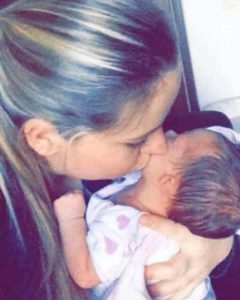
When I think about Poppy-Willow’s beginning, I remember the quiet.

The early-morning stillness.

The soft light.

And the feeling—deep and certain—that someone extraordinary had just arrived.

She was my third daughter, but the moment I held her, I knew her journey would be different. Not lesser, not harder in the way people often assume—just uniquely hers. When the midwife told me she had Microtia, I didn’t have all the answers. I didn’t know what the years ahead would look like. But I knew this:

she was perfect because she was mine.

Those first few years were filled with discoveries—some joyful, some challenging, all meaningful. At three years old, when she was diagnosed with verbal dyspraxia, I remember taking a breath, steadying myself, and choosing—once again—to meet the unknown with love, not fear.
And so our journey began.

Learning to Speak With the Whole Heart

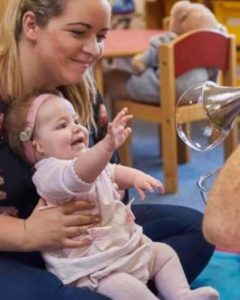
Words came slowly for her, but effort never did, She worked so hard for each sound, each step forward. There were days when her frustration broke my heart—but then she’d try again, and I’d watch as courage grew where fear had been.

I learned quickly that speech is only one of the many ways she communicates.

She spoke with her eyes.

With her laughter.

Learning sign language,

With the way she held my hand—strong, certain, unafraid.

And I realised my job wasn’t to wish her path easier; it was to walk it with her, to fight for her, and to marvel at every step she took.

Watching Her Grow Into Herself

Poppy-Willow found pieces of herself in places I hadn’t expected.

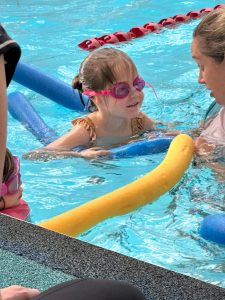
In the water, she was free. I still remember the first time she swam a full length—her determination slicing through the pool like a silver streak. Swimming became her safe place, the world where the pressure lifted and she could simply be.

On her bike, she became daring. Hills, corners, bumps—she met each one with the same spirit she brought to every challenge in life: “I’ll do it. Watch me.”

And then there was the violin.

Oh, the violin.

The first time she drew the bow across the strings, something inside her lit up. Music didn’t trip or twist. It came from her easily—like she had been waiting her whole life to find this way of speaking.

I saw in her a kind of expression words could never capture.

Finding Our Place in the Microtia Community

Meeting other families, other children, other stories—it changed us. It gave our journey context, comfort, and companionship. It reminded me we weren’t alone. And it showed Poppy-Willow that there were other children who looked like her, lived like her, understood her.

Watching her see herself reflected in others was a moment I will always hold close.

She wasn’t “different” anymore.

She was part of something bigger.

She belonged.

And she stood a little taller because of it.

Now: Nearly Nine, Fully Herself

Today, as she approaches nine, I look at my daughter and see strength woven through every part of her life.

She is determined.
She is loving.
She is bright and brave and beautifully unique.

Her Microtia is not a limitation.
Her verbal dyspraxia is not a definition.
They are simply threads in the tapestry of who she is.

The girl who swims like she’s made of water.
The girl who rides like the wind is her friend.
The girl whose violin sings the words she doesn’t always say.

The girl who teaches me every day that different does not mean less— it means extraordinary.

This is Poppy-Willow’s life.

And this is my honour:

to be her mum, to walk beside her, and to watch her become exactly who she was always meant to be.